
On this page
Beyond the Static Brochure
My history with Satujiwa's web presence evolved across two distinct eras. Back in 2023, during my initial full-time tenure shaping the group's visual identity, I deployed an interim WordPress marketing site to establish an immediate digital presence. At the time, a static page-builder site served its purpose. But as the portfolio expanded to over ten properties and seasonal campaigns accelerated, that legacy installation broke down. Every new hotel listing, rate package, or staff adjustment required manual page-builder surgery, leaving non-technical staff frustrated and dependent on developer interventions.
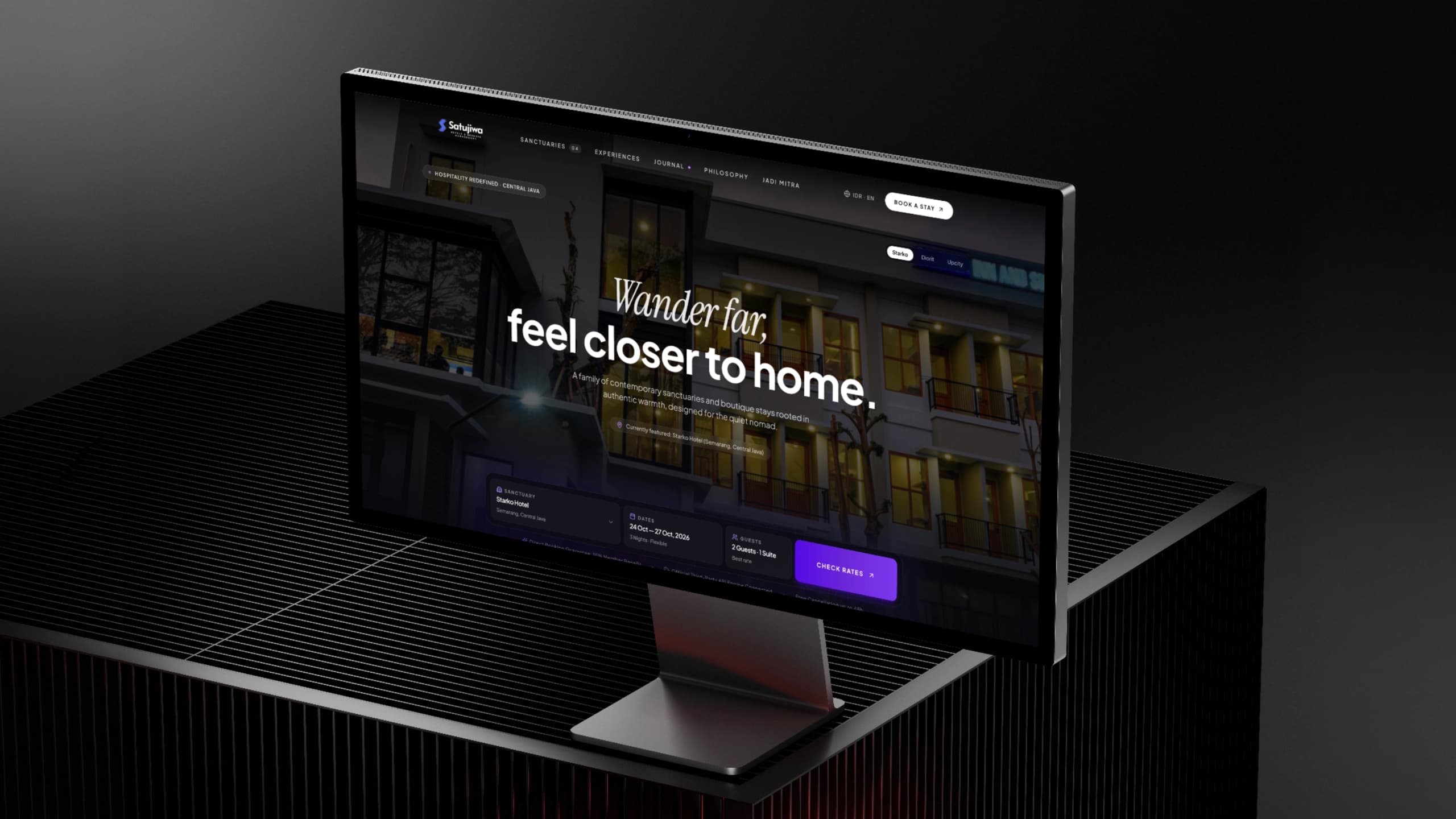
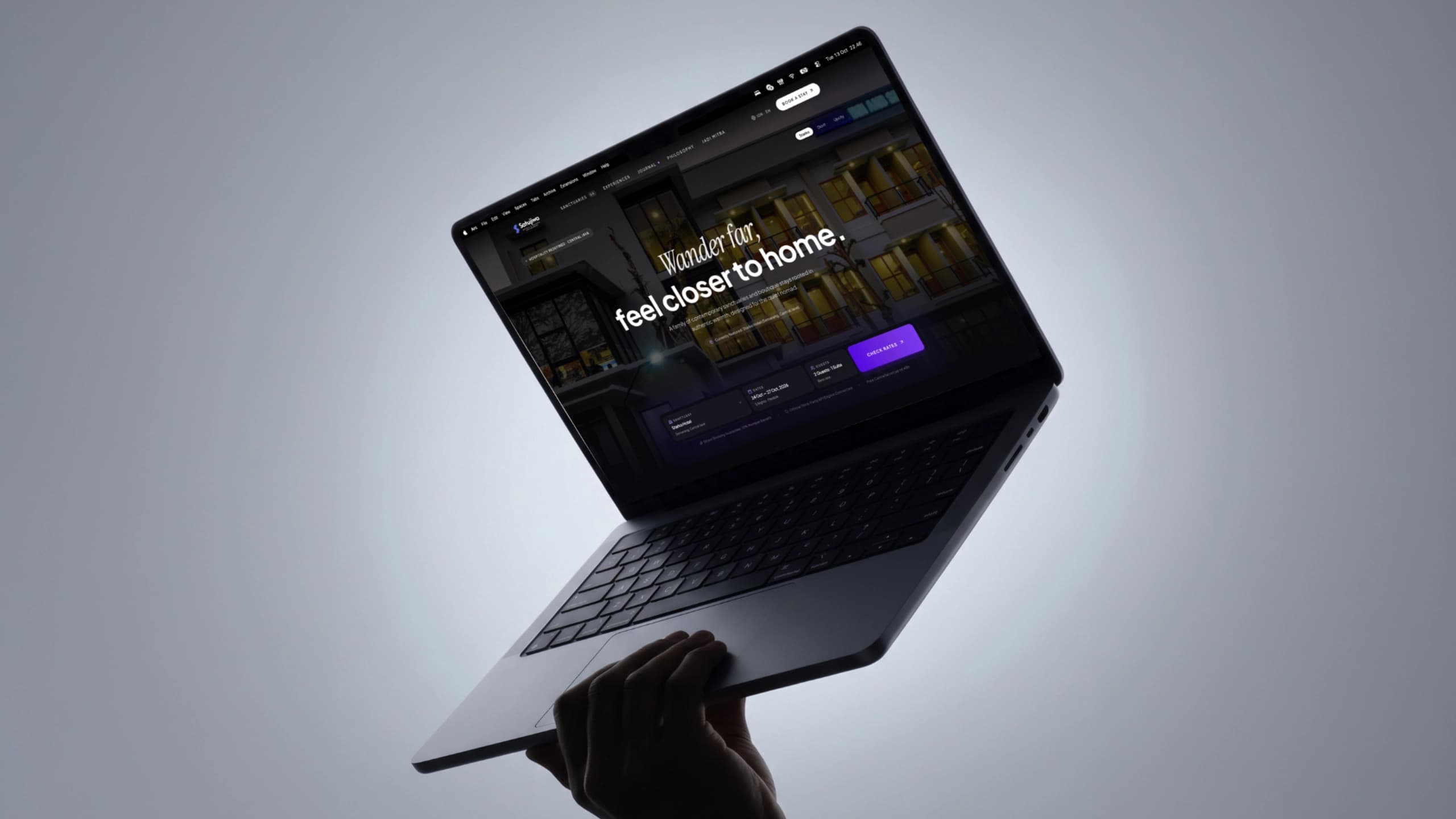
In mid-2026, I returned as an independent full-stack engineer to decommission the old WordPress site and architect a bespoke web platform from the ground up. The objective was not just another corporate landing page. We needed an integrated operational hub that paired brand storytelling with dynamic self-service administration and direct commercial transactions. To achieve this, I engineered a unified full-stack application pairing a robust Laravel backend with a reactive React frontend via Inertia.js.
The Markdown & Approval Pipeline
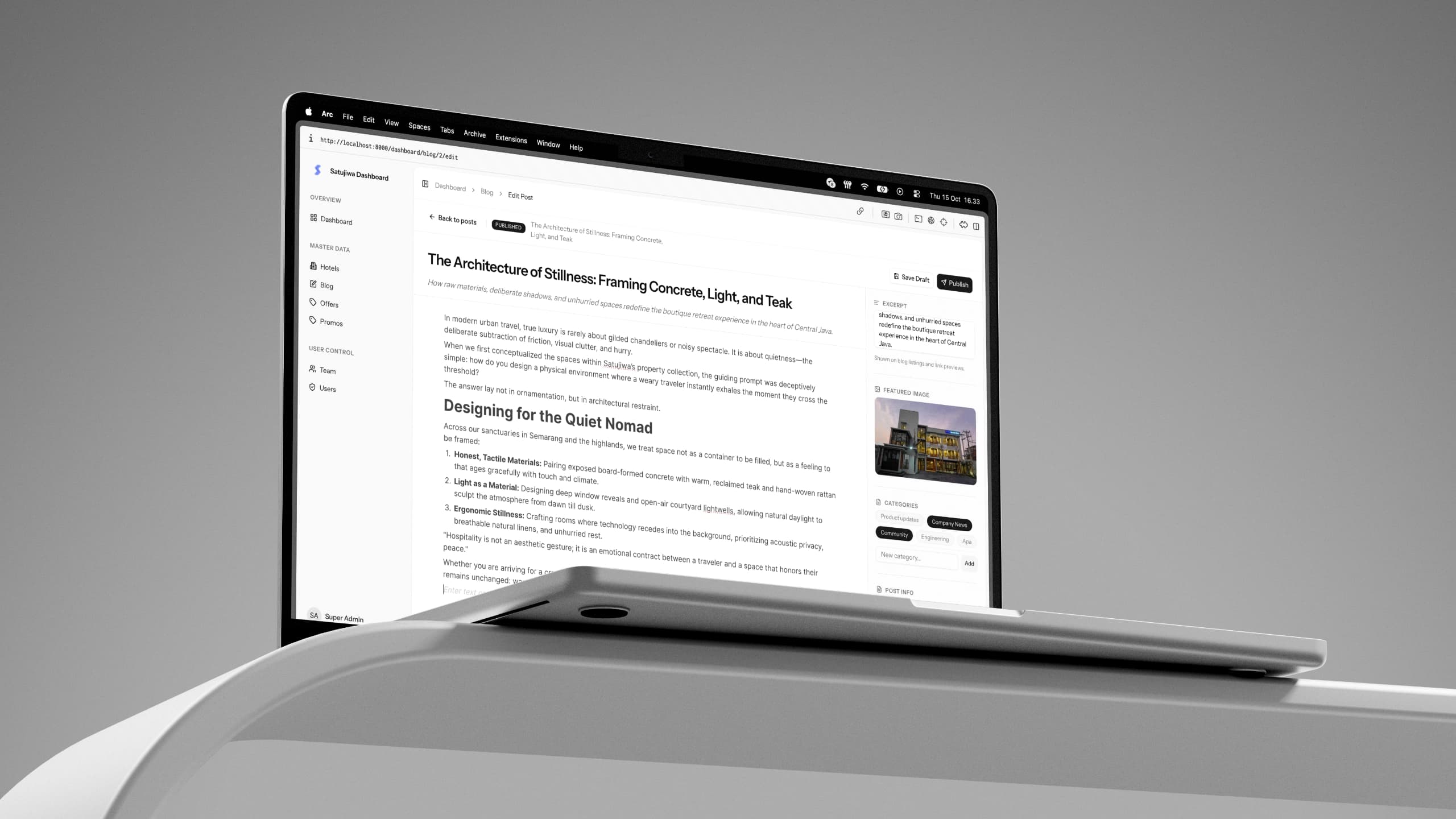
Content marketing is central to Satujiwa's organic discovery, but publishing articles through traditional rich-text WYSIWYG editors was causing daily friction. When hotel marketing staff brainstormed and drafted copy using AI tools like ChatGPT or Claude, pasting the raw output into standard web forms resulted in broken HTML tags, conflicting inline fonts, and chaotic mobile styling.
I replaced that workflow with a Notion-inspired, markdown-friendly block editor. Staff can paste structured markdown directly from external drafting tools, and the interface instantly parses it into clean, semantic document components with zero formatting pollution.
To protect brand quality while empowering property-level teams, I designed a hierarchical review queue. Staff at individual managed hotels have dashboard accounts to draft localized articles, but their submissions remain in an editorial holding queue. Senior marketing managers at the central holding office review the drafts, request revisions, and execute the final one-click publish transition. This keeps property stories authentic without risking the group's public editorial standards.
Structure Over Freeform Chaos
One specific pain point on the previous site was the executive leadership directory. Staff had to manually position individual profile blocks across multiple pages, making organizational adjustments tedious and visually inconsistent.
During discovery, stakeholders initially requested an administrative canvas where they could manually drag leadership cards to absolute pixel coordinates. I pushed back against this approach. Absolute positioning is notoriously fragile: it breaks across viewport sizes, requires constant manual recalculation when roles change, and inevitably leaves orphaned layout elements.
Instead, I implemented an interactive organizational hierarchy tool using a structured tree model. Administrators can reorder corporate structures by selecting parent relationships from clean dropdowns, while the schema strictly prevents deleting a parent node that still holds active subordinates. The data maps directly to a responsive organizational tree on the public site, giving leadership complete flexibility to update personnel without risking broken layout coordinates.
Dynamic Property Hub & Telemetry
Beyond articles and leadership profiles, the dashboard serves as the central control room for Satujiwa's hotel collection. Non-technical administrators can create and update property profiles, modify feature amenities, and launch time-limited promotional banners on the homepage without touching code.
Crucially, the website functions as a commercial multi-property booking hub rather than an informational dead end. By integrating directly with the API of Satujiwa's third-party booking engine vendor, the homepage serves as a central aggregator. Guests select their desired check-in dates and target hotel from a unified interface, which passes validated availability parameters directly to the vendor's checkout endpoints, eliminating guest confusion across separate property domains.
To measure how these updates affected guest behavior, I instrumented the entire user journey with Google Tag Manager and Google Analytics 4, establishing baseline tracking for promotional banner clicks, room search queries, and booking redirects. The final delivery gave the team an independent, high-performance platform capable of scaling with their growing property footprint.
Where it stands.
Delivered
- Custom Laravel and React CMS replacing legacy WordPress site.
- Markdown block editor and multi-tier editorial review queue.
- Relational organizational tree with parent-child integrity safeguards.
- Direct booking engine vendor API aggregator and GA4 telemetry.
What remains
- Booking engine checkout logic is hosted by the external provider and operates as an integrated handoff.